
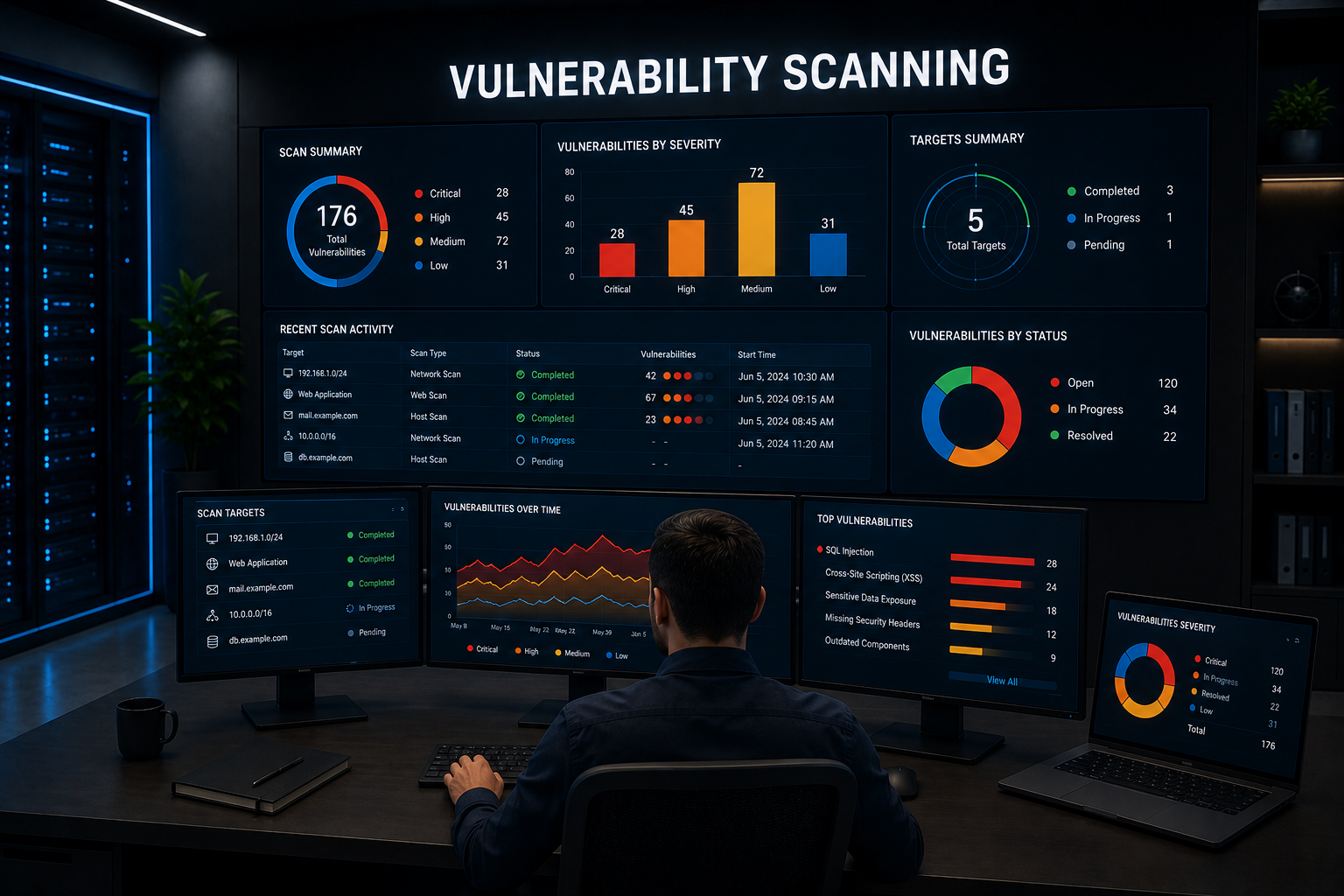
These scans are used to identify vulnerabilities in network devices, such as routers, switches, and firewalls. They typically involve scanning for open ports, checking for known vulnerabilities in the software running on these devices, and assessing the configuration of the devices.
These scans are used to identify vulnerabilities in web applications, such as SQL injection or cross-site scripting (XSS) vulnerabilities. They typically involve sending requests to the application to identify vulnerabilities in the input validation or output encoding mechanisms.
These scans are used to identify vulnerabilities in cloud environments, such as misconfigured permissions or insecure storage configurations. They typically involve scanning the cloud environment for known vulnerabilities in the software and configuration of the cloud resources.
With this automated solution, XeneX quickly and effectively addresses security configuration issues. This service eliminates the need for manual and time-consuming assessments that were historically performed by security staff. XeneX includes a set of policies based on the CIS benchmarks, a well-established standard for host hardening.
After a vulnerability scan is complete, a report is generated that outlines the vulnerabilities that were identified and provides recommendations for remediation. It’s important to note that vulnerability scanning is just one component of a comprehensive security program and should be used in conjunction with other security measures, such as penetration testing and ongoing security monitoring.
A vulnerability scan is a type of security testing that uses automated tools to identify potential weaknesses in a system or network, such as missing software patches or configuration errors, before attackers can exploit them.
XeneX performs network scans (routers, switches, firewalls), web application scans (such as SQL injection and cross-site scripting checks), cloud environment scans (misconfigured permissions or insecure storage), and security configuration assessments benchmarked against CIS standards.
Network scans identify vulnerabilities in devices like routers, switches, and firewalls by checking for open ports, known software vulnerabilities, and device configuration issues.
Web application scans send requests to the application to surface issues like SQL injection or cross-site scripting (XSS) by testing its input validation and output encoding mechanisms.
XeneX generates a report outlining the vulnerabilities identified, along with recommendations for remediation, giving organizations a clear path to fixing the issues found.
vulnerability scanning is one component of a comprehensive security program and should be paired with other measures such as penetration testing and ongoing security monitoring for complete protection.