
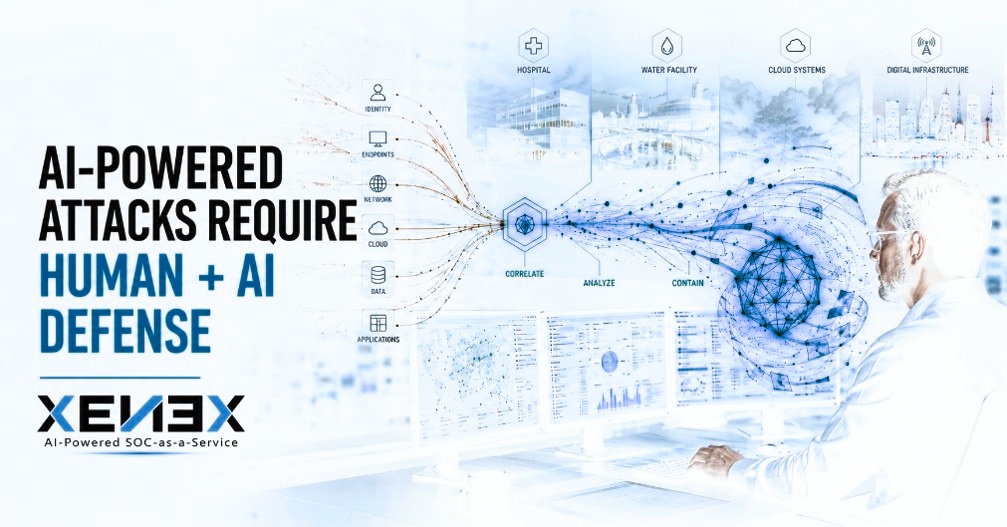
OpenAI, Anthropic, AWS, Microsoft and more than 100 technology and cybersecurity organizations have issued an urgent warning: organizations may have only months to prepare for a new wave of increasingly accessible and sophisticated AI-enabled cyberattacks.
The warning, reported by Axios, should be taken seriously by every board, CEO, CISO and technology leader—especially those responsible for essential services or operating with limited cybersecurity resources.
The industry’s open letter on collective cyber defense makes several points clear:
- Status quo security will not be sufficient.
- AI will make sophisticated cyber capabilities faster, less expensive and more accessible to attackers.
- Organizations must fix their highest-risk weaknesses.
- Defenders need practical access to AI-powered cybersecurity.
- Security providers must offer hands-on assistance—not simply more technology.
- Continuous monitoring, threat-intelligence sharing and verified remediation must become standard.
- Cybersecurity effectiveness should be measured by protection, containment speed and whether fixes actually work.
This is not a formal endorsement of XeneX SOC. It is something more strategically important: independent confirmation from the world’s leading AI, technology and cybersecurity organizations that the operating model behind XeneX is aligned with what defenders now urgently need.
XeneX Was Built for This Moment
XeneX SOC was designed around a simple reality: most small and midsized organizations cannot win an AI-driven cybersecurity battle by purchasing more disconnected tools.
They need a continuously operating security capability that combines advanced AI with experienced human analysts, integrates their existing technologies, prioritizes the risks that matter and helps them act.
That is why XeneX delivers a 24/7/365 Human + AI Security Operations Center as a managed service.
XeneX does not sell its platform.
Our customers receive the operating capability—including OnePortal as the service-delivery and governance interface—without having to acquire, staff, integrate and operate another cybersecurity platform themselves.
How the Industry Warning Validates the XeneX Approach
- AI-enabled attacks require AI-enabled defense
The warning recognizes that attackers will increasingly use AI to accelerate reconnaissance, vulnerability discovery, exploitation and operational scale.
Traditional security teams cannot respond effectively by manually reviewing an ever-growing volume of alerts.
XeneX uses purpose-built AI to help analyze telemetry, correlate activity, prioritize potential threats, support investigations and accelerate response. Experienced security analysts validate consequential findings and actions, preserving human accountability where it matters.
The model is Human + AI—not AI without oversight.
- Under-resourced organizations need access to advanced defense
The open letter specifically calls for making AI-powered defense accessible and deployable for organizations that lack adequate staff or budgets.
This is central to XeneX’s mission.
Small and midsized organizations face many of the same ransomware, identity, cloud, email, supply-chain and data-security threats as large enterprises. What they frequently lack is the budget and personnel to build an enterprise-grade SOC.
XeneX closes that gap by delivering the SOC as a service.
- More tools will not solve the problem
Many organizations already have firewalls, endpoint protection, email security, identity tools, vulnerability scanners, cloud services and backup systems. The difficulty is creating one coordinated operating picture from all of them.
XeneX provides a vendor-neutral, open architecture that can collect and normalize security telemetry across existing environments. Unlimited telemetry within the agreed service scope helps customers avoid making monitoring decisions solely around escalating data-ingestion costs.
OnePortal brings the resulting cases, evidence, workflows, risks and executive reporting into a unified service experience.
- The highest-risk weaknesses must come first
The industry letter urges organizations to address their most dangerous weaknesses—not merely generate larger lists of vulnerabilities.
XeneX connects technical findings to identities, assets, attack paths, critical business services and potential operational impact. This helps organizations distinguish between an issue that is simply present and an exposure that creates a credible path to material loss.
The objective is measurable risk reduction—not alert volume.
- Continuous monitoring must replace periodic reassurance
Annual assessments and point-in-time compliance exercises cannot provide sufficient protection against AI-enabled adversaries operating continuously.
XeneX helps customers maintain ongoing visibility across their approved environments, monitor changes in risk, investigate suspicious activity and retain evidence of security operations.
This supports better executive governance, incident readiness, regulatory reporting and cyber-insurance discussions. It does not automatically guarantee compliance, certification, insurance coverage or incident prevention.
- Agentic AI must remain traceable and accountable
The open letter also calls for traceable agentic identities, observability and continuous monitoring.
This is critical. As organizations deploy autonomous digital workers, AI agents and machine identities, security teams must know:
- Which agent performed an action
- What identity and permissions it used
- Which data and systems it accessed
- Which tools it was authorized to invoke
- Whether the action remained within policy
- How the action can be stopped, revoked or investigated
XeneX’s Human + AI model is designed around governed automation, analyst validation and accountable security operations—not unsupervised autonomy.
The Window for Preparation Is Narrowing
The message from the industry is direct: organizations should not wait until AI-enabled attacks become routine before modernizing their defenses.
The priority now is to:
- Identify the organization’s most critical services and risks.
- Eliminate dangerous identity, access and exposure gaps.
- Establish continuous, vendor-neutral security visibility.
- Apply AI to increase defensive speed and coverage.
- Preserve human validation and executive accountability.
- Test incident containment and business recovery.
- Measure whether controls and remediation actually work.
This is the future XeneX SOC has been preparing to deliver.
The industry warning validates our strategic thesis: AI-powered attacks cannot be addressed through technology acquisition alone. Organizations need an operationally integrated, continuously monitored and human-governed AI defense capability.
That is what XeneX SOC delivers—as a service.
The time to build that capability is not after the next generation of attacks arrives.
It is now.